




The Gift of Gab: The Simple Power of Saying Hello
How starting conversations, listening with intention, and overcoming our hesitation to talk to strangers can lead to stronger relationships.
Published: Aug 16, 2026
A few nights ago, I walked into a cocktail party where I knew only a handful of people. After saying hello to a few familiar faces, I did something that earlier in my life would have made me very uncomfortable: I introduced myself to strangers.
I met a man standing alone at a high-top table who, after we talked for a while, crossed the room to bring his brother over to join us. Later, a woman told me stories about working for 1-800-Flowers back in 1986. She still remembered the people she worked with and how they made her feel.
I left thinking about how much can come from the decision to start a conversation. Relationships must begin somewhere, and they always start with someone saying hello. That’s especially important as loneliness reaches epidemic proportions and many people are looking for stronger connections.
I certainly wasn’t born knowing how to do this. Growing up, I was shy, and learning to talk to people I didn’t know was something I had to work at. But over time it became clear: conversation is a skill that gets easier — and more rewarding — with practice.
Why we hesitate
For something we do every day, conversation can be surprisingly intimidating. Put us in a room full of people, and many of us naturally gravitate toward familiar faces or just reach for our phones.
It’s not hard to see why. Starting a conversation means stepping into uncertainty, wondering what to say and worrying that the other person doesn’t want to talk. Approaching someone new exposes us to the possibility of rejection in a way that staying in our comfort zones never does.
Even after a conversation begins, self-consciousness often gets in the way as we focus too heavily on how we’re coming across. We spend a lot of mental energy searching for a clever opening and worrying about what to say next.
I know these anxieties are real, but they’re often the result of dwelling on what might go wrong instead of what could go right. A conversation is about making a connection, which begins the moment we shift our focus away from ourselves and onto the person in front of us.
Listening for the right conversation
One way to take the pressure off of starting a conversation is to stop thinking you have to know where it’s going. Charles Duhigg, the former New York Times columnist and author of Supercommunicators, told me that a good conversation is less about knowing what to say and more about paying attention to the kind of conversation the other person is trying to have.
Charles says our conversations generally fall into three categories. Sometimes they’re practical in the sense that we’re trying to solve a problem or make a decision. Sometimes they’re emotional — we want to talk about how we feel. And sometimes they’re social, and we’re expressing something about who we are or how we relate to one another.
Problems arise when those conversations don’t match. Charles told me he used to come home after a difficult day and complain about work. His wife would offer advice about how to fix the problem, and instead of appreciating it, he would become frustrated. Eventually he understood why: he was looking for empathy while she was offering a solution.
Charles calls the fix the “matching principle” — learning to recognize the kind of conversation someone is trying to have and responding accordingly rather than following your first instinct. Someone venting usually wants empathy before they want a solution. Someone stuck usually wants help thinking it through. Recognizing which kind of conversation you’re in matters more than having the right thing to say.
That brings us back to listening. Ask a question, then listen closely enough to the answer to understand which kind of conversation you’re actually in.

Waiting for someone to ask
It says something about how rare conversations between strangers have become that one made the front page of The Wall Street Journal. The story centers on Fin Colleton, who was looking for connection during the pandemic when he carried a sign reading “How’s your day going?” to a Philadelphia park and waited.
People stopped to talk, and Fin kept coming back. He eventually added chairs and a table and brought the idea with him when he moved to New York. Six years later, that simple invitation has grown into American Dialogues, where strangers gather in small circles to talk face-to-face.
One of the organizers compared starting a conversation to pushing a boulder: getting it moving is the hardest part. Once it starts rolling, it gets easier. Anyone who has stood at a cocktail party debating whether to introduce themselves to the person across the room knows the feeling.
Fin’s story shows how many people are ready to connect when someone creates the opportunity. The next time you’re standing in a room full of strangers, remember that someone else may be hoping you’ll walk over and start a conversation.
Sometimes all it takes is someone willing to say hello.
All the best,
Jim
Explore Popular Celebrations Pulse Topics





AUTHOR

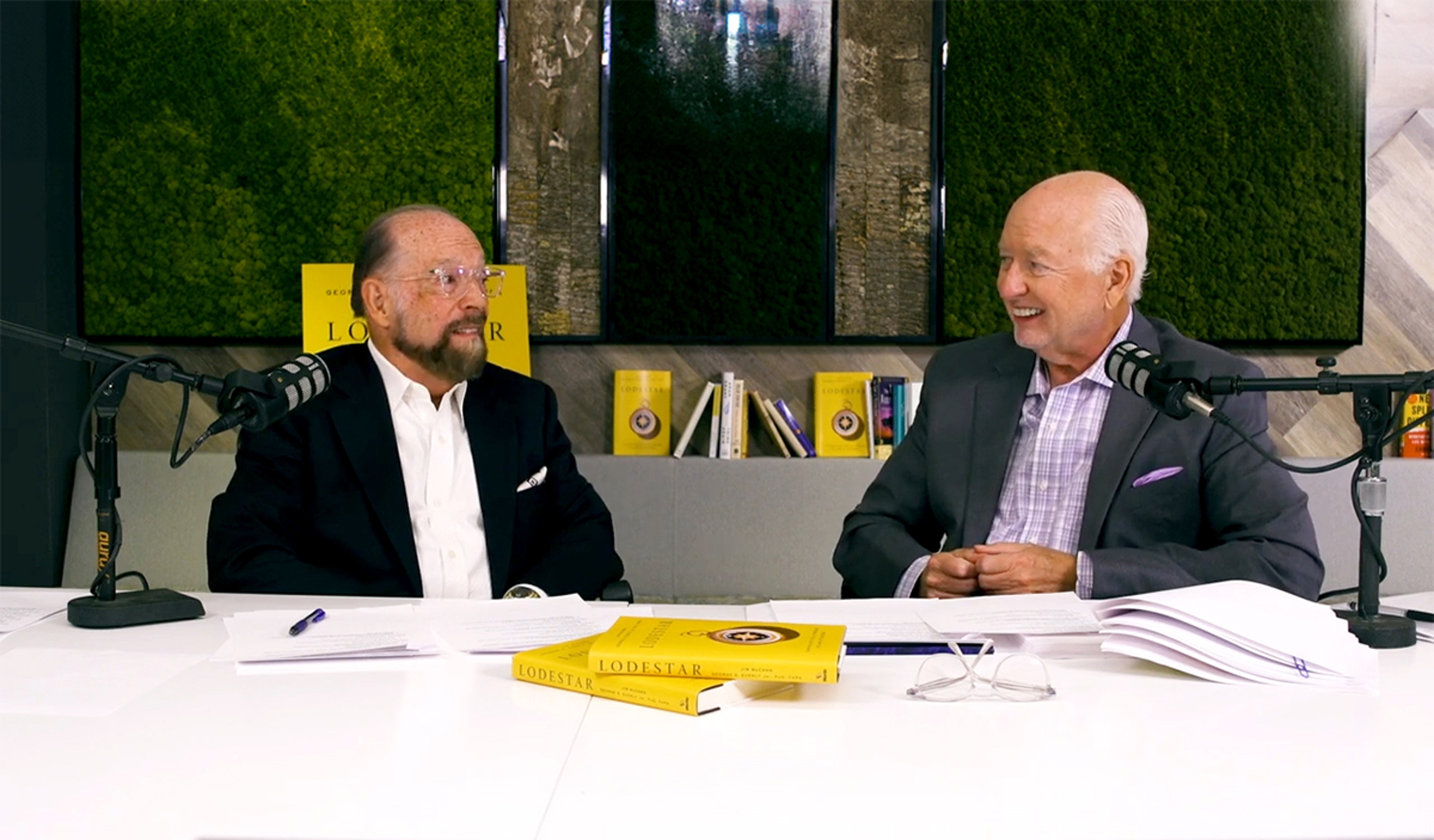
Jim McCann is the founder and chairman of 1-800-FLOWERS.COM, Inc. as well as a business leader, author, and philanthropist with a passion for helping people deliver smiles. Devoted to helping others, he also founded Smile Farms, a 501(c)3 organization that provides meaningful jobs in agricultural settings to young adults and adults with developmental disabilities.