




Why Social Health Matters in Troubled Times
Prioritizing connection can help you navigate uncertainty and build a more meaningful life.
Published: Apr 12, 2026
Lately, it can feel like the headlines never let up. One day it’s geopolitical turmoil. The next, economic uncertainty. Add the pace of technological change, which seems to move faster than most of us can fully absorb, and it’s no wonder so many people feel powerless and unsettled.
Spend too much time with that stream of news, and it’s easy to feel like the world is spiraling out of control. That constant noise can wear you down, leaving you discouraged and tempted to crawl under a rock. When that happens, disconnection and loneliness can take hold.
But even in moments like these, when so much seems beyond our control, we’re not powerless. We still have a say in how we care for ourselves, how we treat one another, and how we show up for others. Those choices may seem small, but they’re often where meaningful change begins.
This is why, especially in times like these, we must pay attention to our social health. The world may be unpredictable, but the strength of our connections is something we can always choose to fortify. It remains our greatest source of stability.
A perspective from the past
In past times of uncertainty, connection has helped people endure, adapt, and even thrive. That idea was very much on my mind during a recent conversation with Allison Gilbert, the noted author who co-wrote The Joy of Connections with the late Dr. Ruth Westheimer and her longtime collaborator, Pierre Lehu.
Most people remember Dr. Ruth as a sex therapist. Later in life, she turned her attention to another subject that mattered deeply to her: loneliness.
Dr. Ruth understood firsthand the connection between turbulent times and social isolation. As a child in Nazi Germany, she was separated from her family and ultimately lost them in the Holocaust. After the war, she lived as a refugee, moving through orphanages in unfamiliar places, surrounded by different languages and cultures.
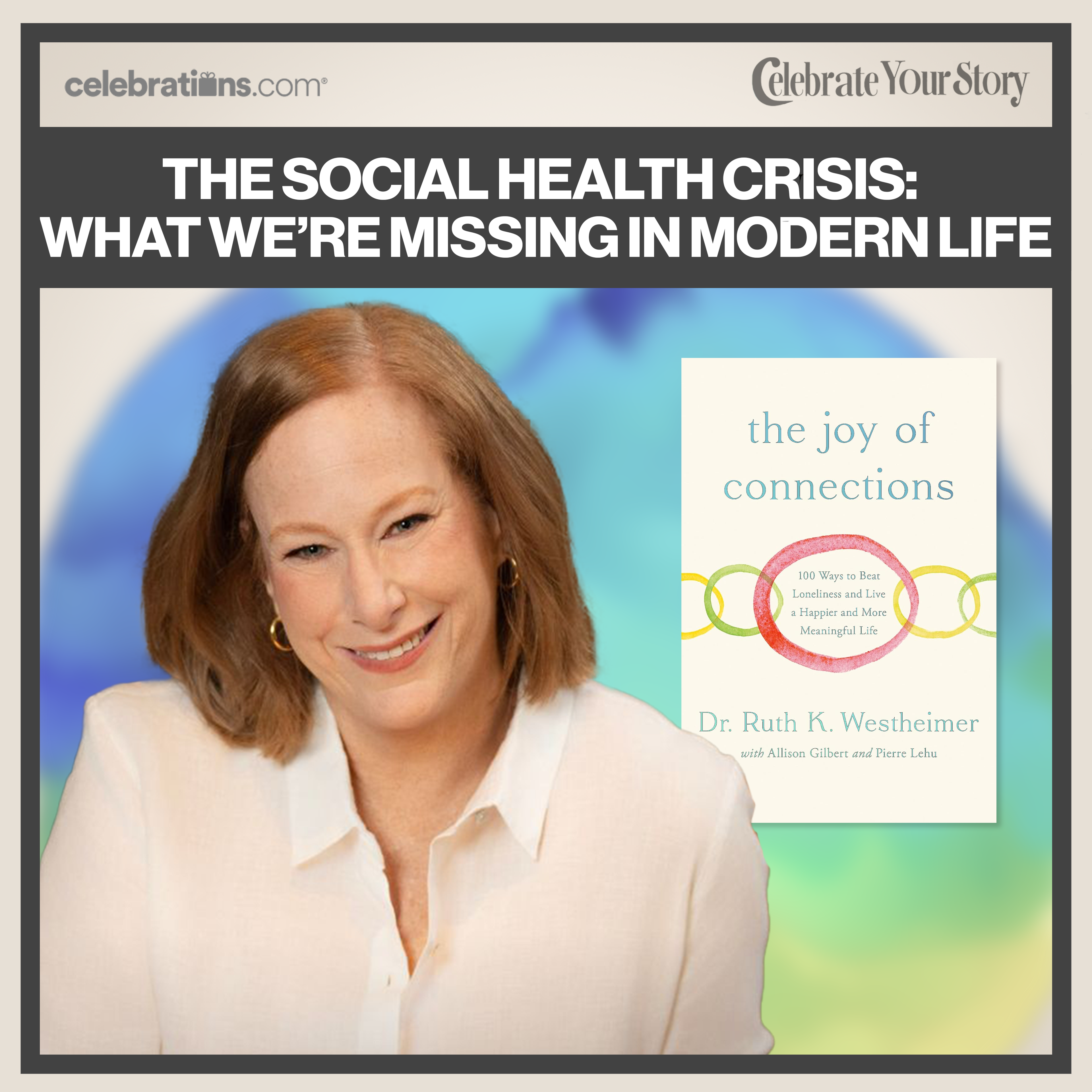
And yet, as Allison told me, Dr. Ruth never stopped believing in the power of connection. She was remarkably intentional about building and maintaining relationships, and she believed social health mattered every bit as much as physical and mental health. Allison continued:
“After you lose your parents when you are 10 years old, you can very easily imagine a life where you bow out. But she didn’t. She met difficulty by leaning in, by creating love, by making friends. We can all do that.”
That belief shaped the way Dr. Ruth thought about loneliness and helped inspire The Joy of Connections. Dr. Ruth, who by then was New York’s Ambassador to Loneliness, saw connection as something we can actively build through habits, choices, and follow-through.
Strengthening social health
The Joy of Connections, which was completed shortly before Dr. Ruth’s death in July 2024, offers 100 practical ways to combat loneliness and live a more meaningful life. (Today, Allison continues that work through a series of conferences at New York’s 92nd Street Y.)
For many, Allison says, the first step to maintaining social health is overcoming what she calls the inertia of the couch. In turbulent times, it’s easy to stay home and scroll through an endless feed of news because it requires so little effort.
Once you’ve done that, the next step can be as simple as saying “yes” to a party invitation when every instinct tells you to stay put. Or, at a restaurant, you can choose to sit at the bar and make yourself open to conversation.

Dr. Ruth, Allison pointed out, was a master of “collecting friends like gems” across every age and stage of life. She focused on the quality, not the quantity, of relationships. As she aged, she was fueled by the energy of intergenerational friendships.
Ultimately, this all comes down to a powerful habit of intention, which Dr. Ruth had in spades. One example: Allison said she never left Dr. Ruth’s apartment with a vague, “See you later.” Instead, Dr. Ruth asked a very specific question: “When will I see you again?”
Allison wouldn’t be allowed to leave until they agreed on a date and time, right then and there. It’s a fantastic — and simple — way to keep to keep a relationship going.
Finding a balance
Focusing on your social health doesn’t mean ignoring the world around you, but it does require making choices about where you place your attention. The forces shaping our communities, workplaces, and country are real, and staying informed is part of being an engaged citizen.
The challenge arises when public life begins to consume too much of our attention and emotional energy. When that happens, it becomes harder to listen well, stay curious, and disagree without turning every difference into a battle.
That’s one reason social health matters so much. When we make time for real conversation, practice patience, and stay connected to people rather than caricatures, the quality of our private lives improves — and so does the quality of our public life.
All the best,
Jim
Explore Popular Celebrations Pulse Topics






AUTHOR

Jim McCann is the founder and chairman of 1-800-FLOWERS.COM, Inc. as well as a business leader, author, and philanthropist with a passion for helping people deliver smiles. Devoted to helping others, he also founded Smile Farms, a 501(c)3 organization that provides meaningful jobs in agricultural settings to young adults and adults with developmental disabilities.