


From Soil to Soul: What Gardens Grow (Besides Plants)
Why the hardest work leads to the most meaningful growth in the garden and beyond.
Published: Mar 22, 2026
Written by our Founder and Chairman, the Celebrations Pulse letters aim to engage with our community. By welcoming your ideas and sharing your stories, we want to help you strengthen your relationships with the most important people in your life.
At last, winter is behind us. With the arrival of spring come warmer temperatures, longer days, and the familiar pull to go back outside. For many of us, that signals a return to the garden.
It also means a lot of hard work ahead. Before flowers or vegetables appear, dead leaves must be raked away, overgrowth pruned, and the ground turned. It’s not glamorous, but it makes everything that follows possible.
Along the way to harvest, there will be small signs of progress, such as the first shoots pushing through the soil and bees darting from flower to flower. And there will be setbacks: a stretch of cold weather, a sudden storm, or something nibbling at what you’ve planted.
Once the garden begins to give back, you’ll see the work was part of the reward all along. And you’ll realize you were growing more than flowers, vegetables, and fruit.
Planting the seeds of connection
There’s a reason gardening is one of the country’s most popular hobbies. The act of growing something to eat or enjoy connects us to the earth and the rhythm of Mother Nature. It also has a way of bringing people together.
I saw this firsthand when I was a young social worker at St. John’s Home for Boys in Queens. Behind the group home was a patch of ground filled with compacted soil and bits of construction debris. Shortly after I arrived, I loosened the soil with a pitchfork and planted some extra tomato plants from my mother’s small garden.
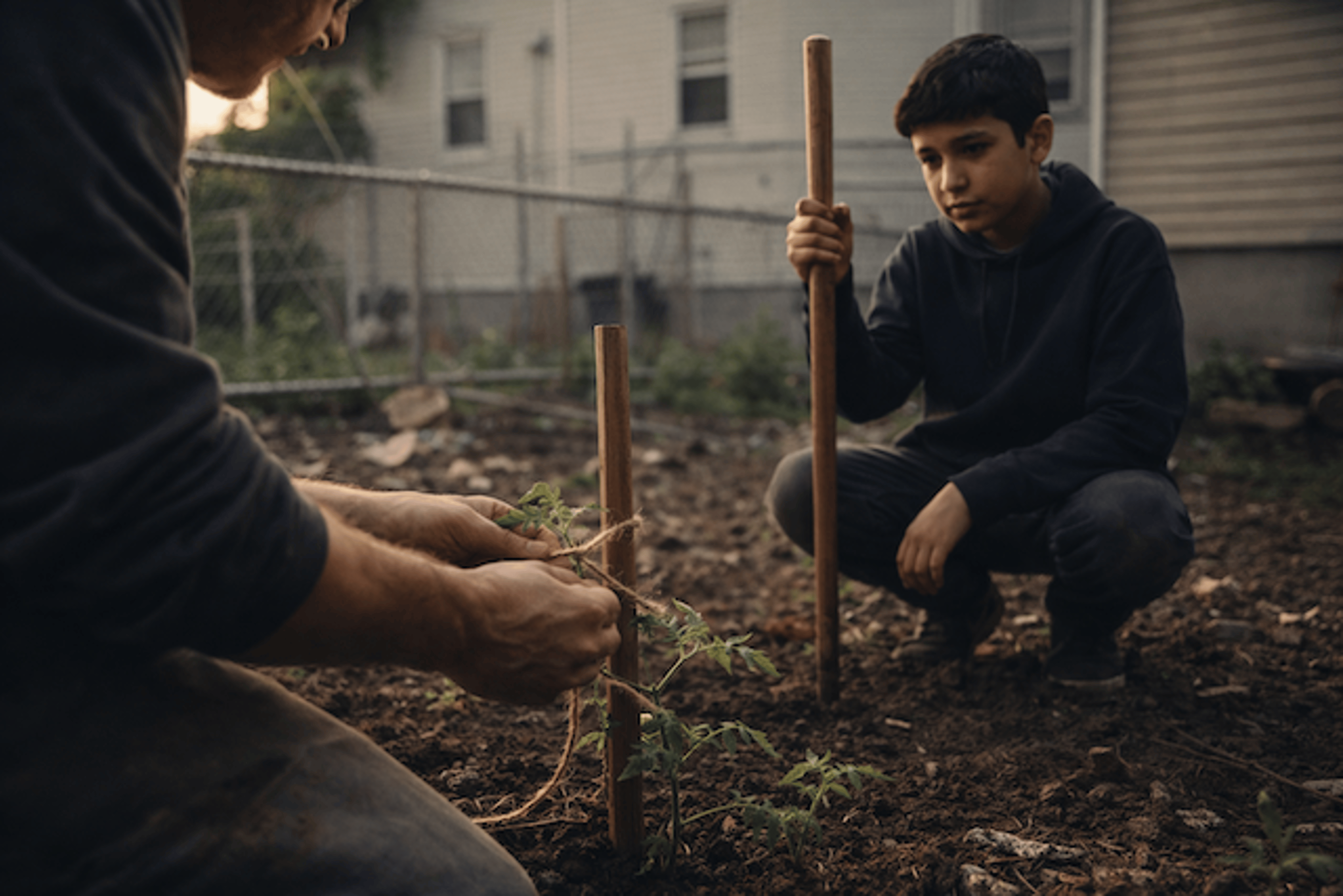
A boy named Norman came home from school, took one look, and laughed. He told me nothing was going to grow there.
Still, I kept at it, doing what I could each day. Over time, the tomatoes began to take hold, and Norman started stopping by after school to check on them. One afternoon, he showed up with a broom handle and some rope so we could prop up the vines.
Somewhere along the way, the garden stopped being mine and became ours.
Working side by side gave us an easy way to talk. That small patch of tomatoes became a bridge between us — and a lesson: with patience, care, and a little faith, even difficult ground can produce something worthwhile.
Life lessons from the garden
Spend enough time in a garden, and you’ll start to notice how much gardening mirrors how we live. Nearly every step has a lesson to offer.
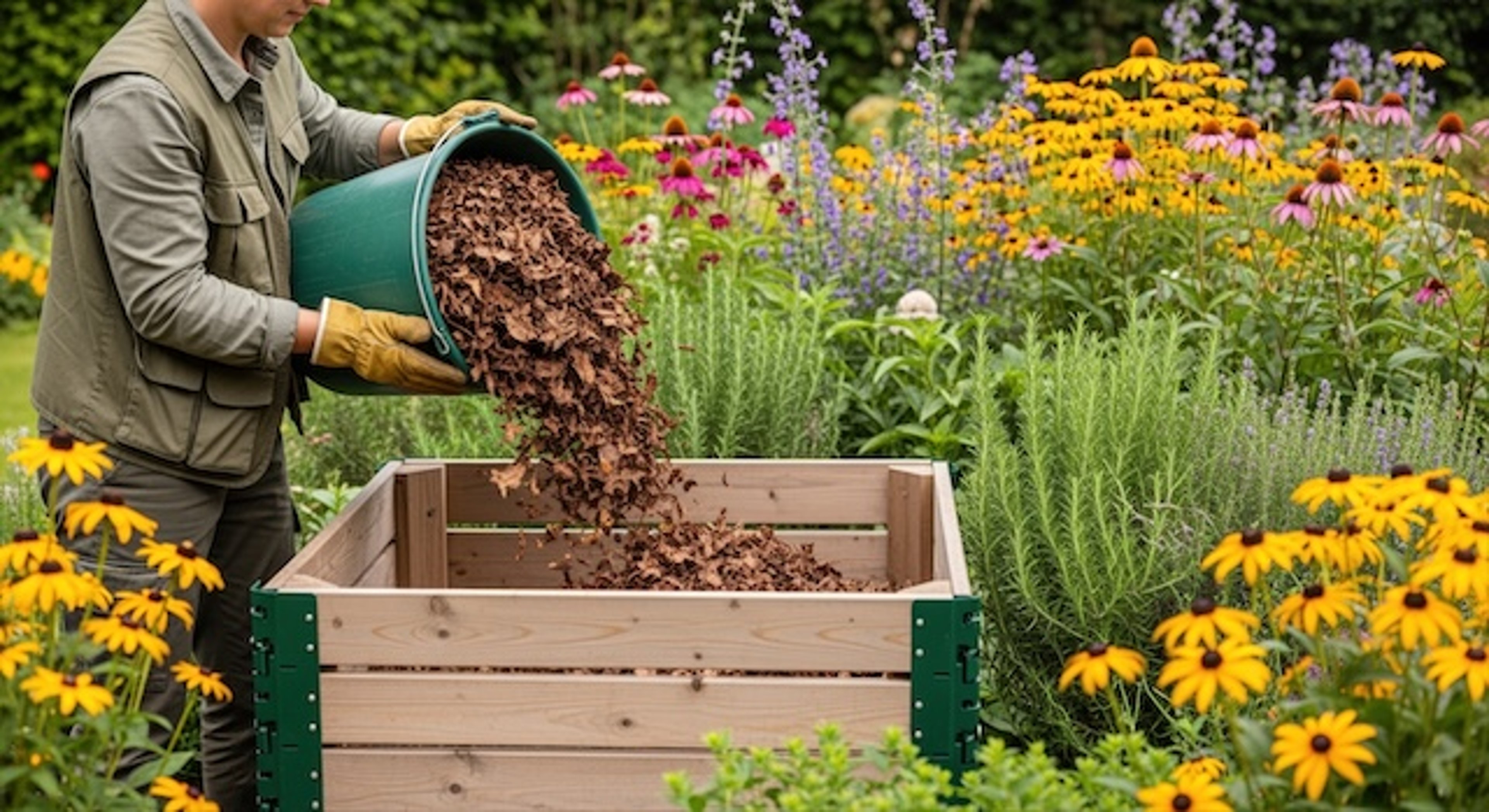
Take composting. Gardeners gather what looks like waste — dead leaves, broken stems, flowers past their prime — and set it aside. Over time, they break down and become the soil that nourishes new growth.
We carry a version of this in our minds. Mistakes we’ve made, missed opportunities, and moments we wish we could take back can feel like endings we’d be better off forgetting. But with time and perspective, they become lessons and a foundation for improvement.
Or consider pruning. Cutting back healthy branches can look harsh, but it allows the plant to grow stronger, to direct its energy where it matters most. In our own lives, there are times when stepping back, letting go, or making a difficult change serve a similar purpose. What feels like a loss in the moment can create space for something healthier to take root.
And then there’s the simplest lesson of all: nothing thrives without care. The same is true of relationships. They need attention in the form of a note, a call, or a small gesture that says you’re thinking of them. Without that, even strong connections can fade.
Cultivating what matters
The lessons of the garden are as old as time itself. Gardens have sustained and grounded us for generations, starting with the famous one called Eden.
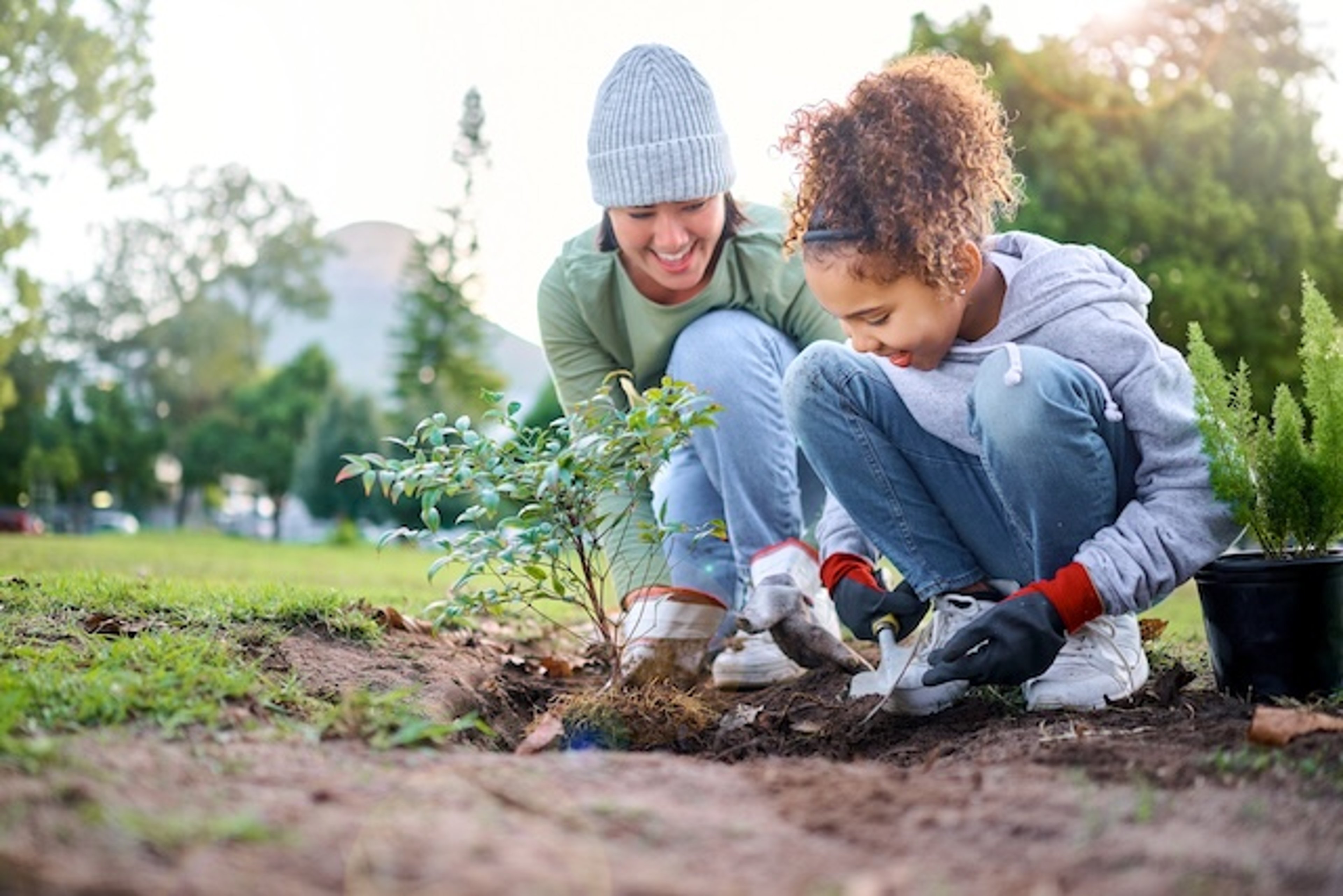
I see that every spring and summer when my wife, Marylou, shares gardening tasks with our seven grandchildren. She doesn’t make a pizza without first taking one of them out to clip fresh herbs and share a story. The ritual matters as much as the meal.
These ideas show up in literature as well. In Voltaire’s Candide, after a series of misadventures, the characters find themselves in a garden. The message is simple: rather than trying to fix a chaotic world, focus on what is close at hand — your work, your relationships, and your growth.
All the best,
Jim
Explore Popular Celebrations Pulse Topics






AUTHOR

Jim McCann is the founder and chairman of 1-800-FLOWERS.COM, Inc. as well as a business leader, author, and philanthropist with a passion for helping people deliver smiles. Devoted to helping others, he also founded Smile Farms, a 501(c)3 organization that provides meaningful jobs in agricultural settings to young adults and adults with developmental disabilities.